Sceye and Softbank Inside The Haps Partnership For Japan
1. This Partnership is about more Than Connectivity
When two businesses with different backgrounds such as a New Mexican-based stratospheric aerospace company and one of Japan’s largest telecoms conglomerates — agree to build a nationwide network of high-altitude platform stations the story is bigger than broadband. This Sceye SoftBank partnership represents a genuine investment in the stratospheric network being a long-lasting, income-generating layers of telecommunications across the nation — not a pilot project or a proof of concept. Rather, this is the beginning of an actual commercial rollout with a clearly defined timeframe and a national-scale goal.
2. SoftBank offers a reason to Support Non-Terrestrial Networks
It’s true that SoftBank’s desire to invest in HAPS didn’t emerge from nowhere. Japan’s geography – thousands of islands, mountainous terrain as well as coastal regions that are frequently being ravaged by earthquakes and hurricanes which creates permanent connectivity gaps that even ground infrastructure alone will not be able to economically close. Satellite connectivity is helpful, but time and cost remain the primary issues for mass-market applications. A stratospheric layered at 20 kilometres and occupying a position above specific regions while delivering broadband at low-latency to standard devices, solves several of these issues simultaneously. For SoftBank investing in stratospheric platforms is the logical extension of a strategy already in place in order to diversify out of terrestrial network dependency.
3. Pre-Commercial Service Plans for Japan by 2026. Signify Real Momentum
The most important aspect that differentiates this agreement from other HAPS announcements is the goal of precommercial services to Japan beginning in 2026. It’s not just a vague agreement, it’s an particular operational milestone with regulatory, infrastructure and commercial implications to it. When they reach precommercial status, the platforms must be able to perform station keeping consistently, delivering usable signal quality, and connecting to SoftBank’s current network architecture. The way this date has been publicly committed to suggests each party has cleared enough technical and regulatory hurdles that it can be considered a real-world goal instead of aspirational marketing.
4. Sceye offers endurance and payload Capacity Other Platforms Struggle to match
Not every HAPS aircraft is built to work on being part of a large-scale commercial network. Fixed-wing solar airplanes typically swap payload capacity for altitude performance, which limits the amount of telecommunications and observation equipment they can transport. Sceye’s lighter-than-air airship design takes an alternative approach — buoyancy supports the weight of the aircraft which means that the sunlight is used for propulsion for station keeping, propulsion, and powering the onboard system rather than simply keeping the aircraft in place. This decision in the design can lead to substantial advantages in payload capacity and endurance of missions as well as mission endurance. Both of these factors matter enormously when you’re trying to ensure continuous coverage across populated areas.
5. The Platform’s Multimission Capability Does the Economic Work
One of the underappreciated aspects of the Sceye approach is that a single platform doesn’t have to justify its operational cost by only generating revenue from telecoms. The same platform that provides stratospheric bandwidth can also carry sensors for monitoring greenhouse gas emissions as well as disaster detection Earth observation, and disaster detection. For a country like Japan, which faces significant dangers from natural disasters and has a national policy of monitoring emissions This multi-payload structure will make the infrastructure much easier to justify at both a national as well as a commercial level. The antenna for telecoms and the climate sensor aren’t competing -they’re sharing a common platform that’s already in place.
6. Beamforming together with HIBS Technology can make the signal Commercially Usable
Delivering broadband from 20 kilometres isn’t simply a matter of making an antenna point downwards. The signal needs to be directed, shaped, and controlled in a way that allows users efficiently over a huge geographical area. Beamforming technology allows the spherical telecom antenna to concentrate signal energy toward the areas with the greatest demand instead of broadcasting uniformly and wasting resources over an empty seas or areas that are uninhabited. Combined with the HIBS (High-Altitude IMT Base Station) standards, which allow the platform to be compatible with existing 4G and fiveG device ecosystems, which means that regular smartphones can connect with no special equipment, which is a crucial prerequisite for any mass-market deployment.
7. Japan’s Island Geography Is an Ideal Test Case for the Rest of the World
If the stratospheric network works at a large scale in Japan then the pattern is adaptable to every other country which has similar challenges in coverage, which is most worldwide. Indonesia is one of them. The Philippines, Canada, Brazil and many Pacific islands are all facing versions of the same problem and terrain which impedes the conventional infrastructure economy. Japan’s mix of technological sophistication and capacity for regulation, along with real need for geography provides it with the highest opportunity to test an all-encompassing network built on stratospheric platforms. The lessons that SoftBank and Sceye illustrate will influence deployments in other places for years.
8. This New Mexico Connection Matters More Than It Appear
Sceye operating out of New Mexico isn’t incidental. The state provides high-altitude tests conditions, established aeronautical infrastructures, and an airspace suitable for the type of prolonged flight tests that stratospheric vehicle development requires. As one of the more serious aerospace firms with a presence in New Mexico, Sceye has developed its program in a setting that facilitates real technological iteration rather than release cycles. The gap between announcing the HAPS platform and actually being able to keep one reliably for weeks at the same time is massive, also the New Mexico base reflects a company which has been putting in the not-so-glamorous job required to bridge the gap.
9. Founder Vision has shaped the Partnership’s long-term goals
Mikkel Vestergaard’s work experience that is rooted in applying technology to address environmental and humanitarian challenges has affected what Sceye is trying to build and the reasons. The collaboration with SoftBank isn’t just a commercial telecoms game. The platform’s emphasis of disasters detection monitoring at a real-time pace, and connectivity for those in remote areas are a result of a belief system that the stratospheric internet should serve various social, as well as commercial ones. The way it is framed has likely resulted in Sceye a more desirable partner to a company like SoftBank that operates in a regulatory and public environment where its corporate purpose carries real weight.
10. 2026 Is the Year where the Stratospheric Tier either proves itself or Resets Expectations
The HAPS sector has been promoting commercial deployment for much longer than observers will ever remember. What is unique about what makes the Sceye and SoftBank timetable so important is the fact that it links an exact country, specific operator, and even a service milestone to a specific year. When pre-commercial networks in Japan begin as scheduled and meet the specifications 2026 will be the year when connectivity to the stratosphere changed from promising technology to functional infrastructure. If it fails, the sector will face harder questions regarding whether the challenges in engineering are as well-solved as recent announcements suggest. However, the partnership has set a path in the sky that is worth keeping an eye on. View the top Sceye Softbank for blog advice including Wildfire detection technology, softbank sceye haps japan 2026, Sceye Softbank, Sceye HAPS, HAPS technology leader, non-terrestrial infrastructure, whats the haps, Solar-powered HAPS, Sustainable aerospace innovation, Stratospheric earth observation and more.
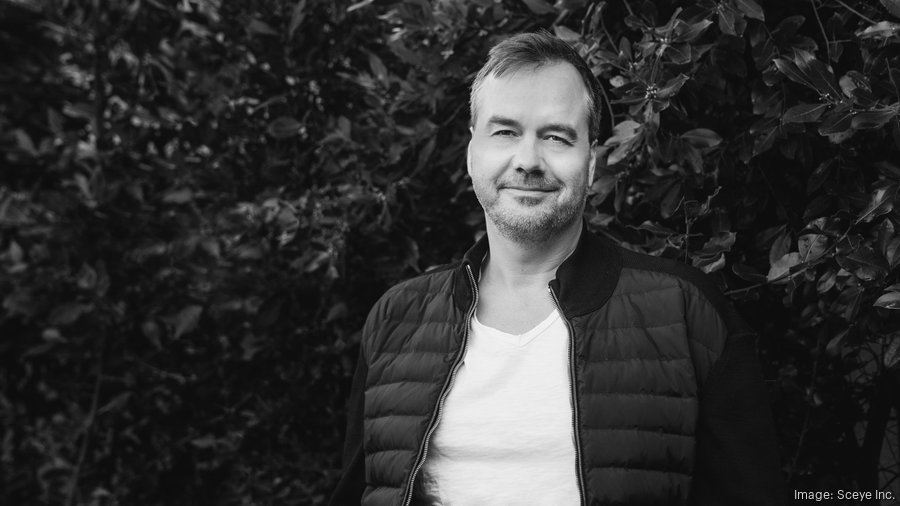
Mikkel Vestergaard’s Vision Behind Sceye’s Aerospace Mission
1. The Founding Vision is an underrated factor In Aerospace Company Outcomes
The aerospace business produces two broad categories of companies. The first one is based on a technology seeking applications that require engineering capabilities seeking a market. The second starts with a issue that’s important and moves backwards to the technology required to tackle the issue. The distinction sounds abstract until you consider what each kind of company actually constructs on, the partnerships it chooses to pursue, and how it makes decisions when resources are limited. Sceye belongs in the second group, and having a clear understanding of the orientation is crucial to know why the firm has chosen the design choices it has made — lighter-than-air design, multi-mission payloads, emphasis on endurance, and a primary headquarters situated in New Mexico rather than the coastal aerospace clusters which attract many venture-backed space businesses.
2. The Problem Vestergaard started with was much bigger Than Connectivity
The majority of HAPS companies frame their primary story around telecommunications, connections, the neglected billions, the economics of reaching people in remote areas without connectivity to the internet. These are real issues, but they’re commercial problems that require solutions. Mikkel Vestergaard’s starting point was different. His expertise in applying modern technologies to the environmental and humanitarian challenges produced a founding orientation at Sceye that considers connectivity to be an output of the stratospheric infrastructure rather than its defining purpose. Monitoring greenhouse gas levels as well as disaster detection, earth observation, oil pollution surveillance, and management of natural resources were all part of the mission’s infrastructure from the beginning — not attributes added later to make a telecoms platform look more socially-conscious.
3. The Multi-Mission System is A Direct Expression Of That Vision
If you can see that the initial question was about how the an infrastructure for the stratosphere could solve the major monitor and connectivity problems at the same time in a single platform, multi-payload becomes a shrewd commercial idea and instead appears like the right answer to the question. A platform which carries telecoms equipment, as well as real-time methane monitoring sensors as well as technology to detect wildfires isn’t striving for a solution that can be all things to all people — it’s reflecting a coherent view that the issues to be addressed from the stratosphere are interconnected, and a vehicle that is capable of solving a variety of them at once is more in line with the goal than one made to work with a single revenue stream.
4. New Mexico Was a Deliberate Choice, Not an Accidental One
Sceye’s presence its headquarters in New Mexico reflects practical engineering requirements, such as access to airspace or atmospheric testing conditions capacities for altitude, but also speaks volumes about the identity of the company. The established aviation clusters that are located in California and Texas have attracted companies whose principal customers are investors, defence contractors, as well as the media ecosystem that covers these areas. New Mexico offers something different in the form of the physical surroundings needed to do the actual work of making and testing stratospheric lighterthan-air systems, without the pressure of proximity to the audiences who fund and write about aerospace. Among aerospace companies in New Mexico, Sceye has developed a program of development based to engineering validation and not the public narrative — a choice that reflects a founder more concerned with whether the platform actually functions instead of if it can generate amazing announcement cycles.
5. Endurance as a Design Priority Is an indication of a longer-term mission focus
Short-endurance HAPS platforms are interesting examples. Long-endurance platforms are a type of infrastructure. The focus the importance of Sceye for its endurance — building vehicles that could hold stations for months or even weeks, instead of days reflects a founder’s understanding that the issues worth addressing at the top of the ecliptic don’t fix by themselves in between flight missions. Greenhouse gas monitoring which operates for a week before it goes dark leaves a recording with no scientific or regulatory worth. Disaster detection that requires the use of a platform that is repositioned and restarted after every deployment cannot be the permanent early warning system that emergency managers need. The endurance specifications are an outline of what needs of the mission are rather than a performance metric pursued for its own sake.
6. The Humanitarian Lens Shapes Which Partnerships are Prioritised
The majority of partnerships are not worth exploring considering the criteria the company employs to judge potential collaborators can reveal something important regarding its aims. Sceye’s alliance with SoftBank on Japan’s nationwide HAPS network — aiming for pre-commercial services for 2026It is noteworthy not only for its commercial scale, but because of its connection to countries that need the stratospheric infrastructure that it provides. Japan’s seismic vulnerability, the complex geography, and commitment to environmental monitoring makes the ideal deployment environment where the platform’s multi-mission capabilities fulfill actual needs, not just creating revenue in a market which has plenty of alternatives. This alignment between commercial partnerships with mission and partnership is not by chance.
7. Making investments in Future Technologies Requires Conviction About the Problem
Sceye operates in a growth environment in which the technologies it relies on lithium-sulfur batteries with 425 Wh/kg energy density, high-efficiency solar cells designed for stratospheric aircraft, and advanced beamforming for stratospheric antennas — are all far beyond what’s feasible today. To develop a business strategy around technologies that are evolving but not yet fully developed requires a founder with a clear enough view about the significance of this issue to justify the timeline risk. Vestergaard’s faith that the stratospheric internet will become an ongoing layer of global monitoring and connectivity architecture is what drives investment into future technologies that will not fully realize their potential until the platform they support has been in use commercially.
8. Its Environmental Monitoring Mission Has Become More urgent since its creation.
One of the benefits that comes with forming a business around a real problem, not a trend in technology, is that the issue can become much more rather not less important in the course of time. When Sceye was founded, the case for persistent surveillance of the stratospheric greenhouse gas fire detection, wildfire monitoring, and weather-related monitoring was strong in the sense of. Since then, escalating wildfire seasons, the increasing scrutiny of methane emissions under international climate frameworks, and the actual inadequacy of our existing monitoring infrastructure have all strengthened the case for Sceye in a significant way. It isn’t necessary change to remain applicable ? the world has shifted toward it.
9. Sceye’s Careers Sceye show Sceye’s Breadth of the Mission
The spectrum of disciplines required to create and operate stratospheric platforms that can be used for multiple missions is more extensive than many aerospace programs need. Sceye careers include aerospace science, materials engineering, communications, power systems, technology development, remote sensing, and regulatory affairs – which is a multidisciplinary approach that highlights the breadth of what Sceye is designed to do. Companies based on a single-use technology usually employ only within that technology’s discipline. They are founded on a concept that requires multiple converging technology to overcome the boundaries of these disciplines. The talent profile Sceye recruits and creates is a reflection on our visionary founder’s goals.
10. The Vision Work Because It’s Specific About the Problem And Not the Solution
The most long-lasting visions of founding in technology companies are explicit on the problem they’re working to solve and flexible regarding the solutions. Vestergaard’s framework — which is a persistent stratospheric infrastructure that monitors, connectivity, environmental observation is a precise enough concept to define clear engineering needs as well as clear partnership guidelines, however, it’s flexible enough allow for the development of technology that can enable. As battery chemistry gets better, when solar cell efficiency rises, as HIBS standards become more mature, and as the regulatory framework for stratospheric operations grows, Sceye’s mission stays the same while its method of executing its mission incorporates the most current technology at each stage. This kind of structure — fixed on the problem but flexible to the solution is the reason why the aerospace mission has consistency across the development timeline that is measured in years, not cycle of products. Have a look at the top Beamforming in telecommunications for more advice including what’s the haps, sceye haps airship status 2025 2026, what are high-altitude platform stations, sceye careers, sceye greenhouse gas monitoring, what does haps, sceye aerospace, Sceye Inc, sceye disaster detection, Mikkel Vestergaard and more.
